How long does a forklift licence last? UK and Ireland
In the UK and Ireland, a forklift certificate has no expiry date in law. The regulators in both countries say there is no fixed period after which an operator must be retrained. They expect you to set a reassessment schedule, write it down, and bring it forward when something changes, such as a long absence or a near miss.
So the date that matters is the one you set: when each operator is due to be reassessed. If that date passes and they are still on the rota for a truck, the gap is yours, not the training provider's. This post covers what the two regulators say, how to set the dates, and how to stop the rota putting someone on a truck after theirs has passed. At the end there is a register layout you can copy.
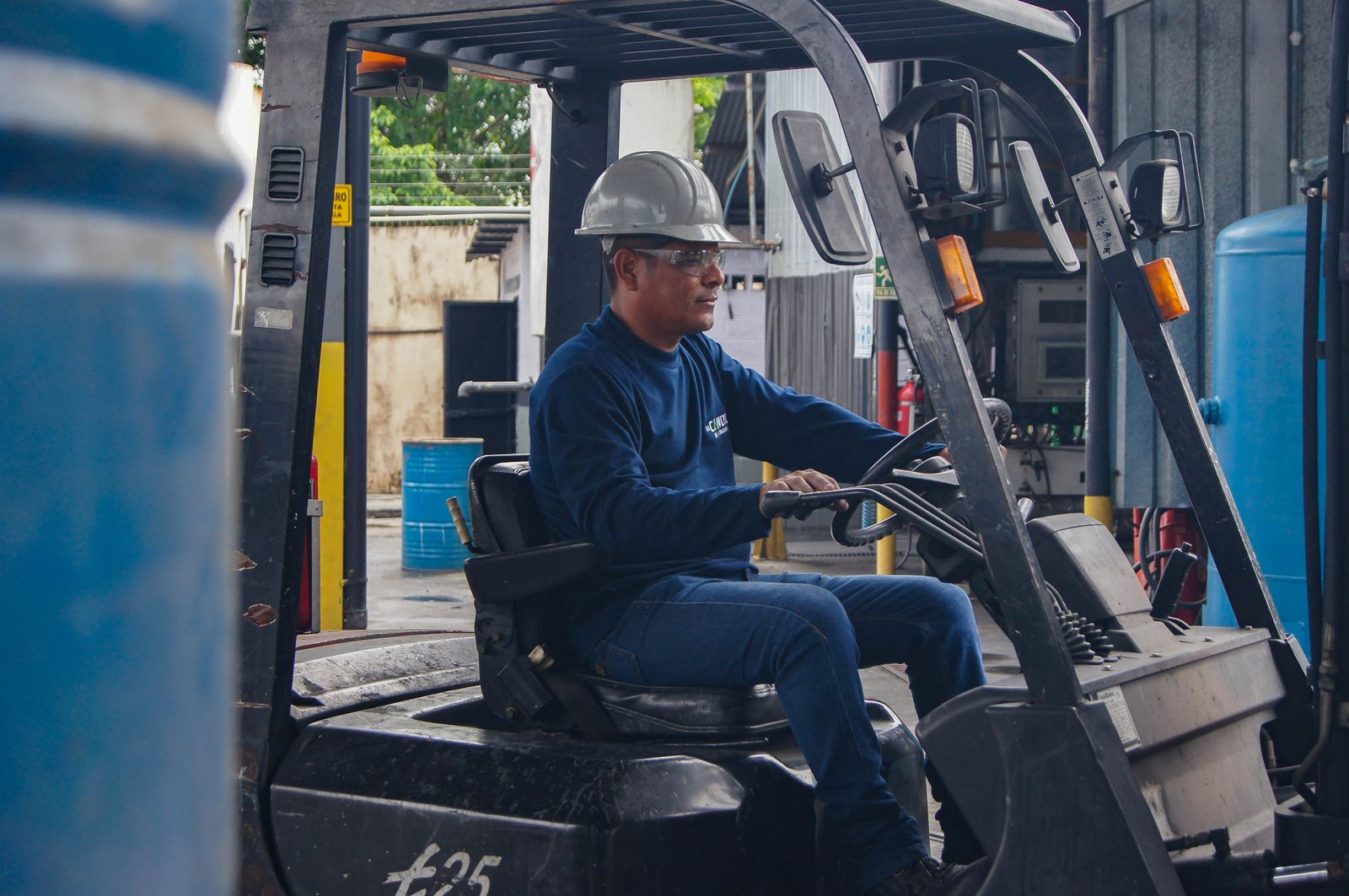
What the UK rules say
The Health and Safety Executive's lift-truck training guidance says there is "no specific time period" after which you have to give refresher training or a formal assessment. On agency or visiting operators, it says competence "can be demonstrated via an appropriate training certificate". The certificate is evidence that someone was trained. It is not a licence with a renewal date.
The same page lists when refresher training or retesting may be needed. Operators who:
- "have not used trucks for some time"
- "are occasional users"
- "appear to have developed unsafe working practices"
- "have had an accident or near miss"
- "have changed their working practices or environment"
It suggests recording assessments in each operator's personnel records. The detail sits in the Approved Code of Practice L117, Rider-operated lift trucks, which the page links to.
What the Irish rules say, under the new code
Ireland has a new code. The Health and Safety Authority's Code of Practice: Safe Use of Industrial Trucks came into operation on 12 September 2025, under section 60 of the Safety, Health and Welfare at Work Act 2005. On timing, it reads like the UK guidance: "There is no specific requirement to provide refresher training after a set period of time".
It goes further than the UK page in three places that affect a rota:
- The schedule must be written down. How often you assess the need for refresher training "should be recorded in a schedule". Assessment should be "formally scheduled in order to ensure that it is done at reasonable intervals".
- A fixed interval does not replace watching. You can choose automatic refresher training after a set period, "but, where this approach is adopted, it will still be necessary to monitor performance in case retraining is required before the set period ends". In the code's words, "the possession of a training certificate alone does not ensure the safe operation of industrial trucks".
- Authorisation is per truck and per site. After training, the employer gives written authorisation, "specific and limited to those industrial trucks that the operator has been trained to use", and "site specific". It names the operator, the date, the trucks and any conditions, such as area limits.
The Irish list of triggers adds one the UK page does not have: operators who "return to work after an extended absence".
If your operators were trained under the old 2001 code, that training "will continue to be recognised". Training providers can keep training to the 2001 code for 18 months from 12 September 2025, so until 12 March 2027. After that, all new training should follow the new code.
This is a summary for the person who builds the rota, not legal advice. Your health and safety adviser and your risk assessment decide the interval for your site.
The date that goes on the rota
Neither regulator gives you a date, so you set one for each operator and each truck type: reassess by. Three rules keep it honest.
Pick an interval and write down why. The interval is your decision. Base it on how often people drive, what they drive and what your risk assessment says. An operator who drives every shift and one who covers a reach truck twice a year should not have the same interval. In Ireland the code expects this schedule in writing.
A trigger moves the date to "before their next truck shift". Long absence, a near miss, unsafe driving that someone saw, a new site or a new truck type. When one of these happens, the operator's next truck shift waits for the reassessment.
Check the date against the shift, not against today. This is the check that is easy to get wrong. You build the December rota in mid-November. An operator's reassessment is due on 2 December. Ask "are they in date today?" and the answer is yes, so they go on the rota for the whole month, and from 3 December they drive past their date. The question to ask is "are they in date on the day of this shift?"
A worked example: four operators, one December rota
This example is illustrative. The site has chosen a three-year interval for regular drivers, as an example of an interval a site might set, not a legal figure. The rota covers 30 November to 27 December 2026 and is built on 16 November.
| Operator | Trucks authorised | Last assessed | What happened | Reassess by | Truck shifts allowed in this rota |
|---|---|---|---|---|---|
| 1 | Counterbalance, reach | 10 Mar 2024 | Nothing new | 10 Mar 2027 | All |
| 2 | Counterbalance | 2 Dec 2023 | Nothing new | 2 Dec 2026 | Up to 2 Dec, then only after reassessment |
| 3 | Reach | 14 Jan 2025 | Back on 7 Dec after five months off | Before next truck shift | None until reassessed |
| 4 | Counterbalance | 5 May 2025 | Near miss on 9 Nov | Before next truck shift | None until reassessed |
On 16 November, a check of "who is in date today?" passes all four. A check against each shift's date catches operator 2. Operators 3 and 4 are caught only if the absence and the near miss were entered as a new "reassess by" date, which is why the register has a "Triggers since" column. The fix: book operator 4 before their first shift, operator 2 by 2 December, and operator 3 before they return on 7 December. You only see that in time if the check runs when the rota is built.
What your rota app does with the date
Most rota apps can store a date. What matters is whether the rota stops a shift after it. Here is what two vendors' own pages say, as read on 14 November 2026, beside ours. For any other app, ask the three questions below.
| App | Where the date lives | What happens to a shift after it, according to the vendor |
|---|---|---|
| Deputy | Training records on each employee, with an expiry | Its training page (from 2017) says scheduling "lines up with only qualified staff" and that Deputy "will automatically warn you" when training expires |
| RotaCloud | An expiry date on documents in the employee profile | Its September 2025 update adds the date, with email reminders "coming soon". It does not say the date affects the rota |
| Fivexer | An expiry date on the skill, per person | Each shift is checked against its own date. An operator past their date is left out of an automatic draft. If someone puts them on by hand, publishing stops and shows the rule breach. A manager can still publish on purpose |
If you're comparing suppliers, ask each one these three questions. Ask them to show you on a test rota, not tell you:
- Is the date checked against the day of the shift, or against today?
- If a shift breaks it, does the rota warn you, or refuse to publish?
- Can the date be set per truck type, or only per person?
A register you can copy
Keep one row per operator per truck type. It works in a spreadsheet. A rota tool only adds the check against each shift's date.
| Column | What goes in it | Your site |
|---|---|---|
| Operator | Name or payroll number | |
| Truck type | Counterbalance, reach, VNA, pallet stacker… one row each | |
| Site and area | Where the written authorisation applies, with any limits | |
| Authorised on | Date of the written authorisation | |
| Last assessed | Date, and who assessed | |
| Interval | The one you chose, and why, in a few words | |
| Reassess by | Last assessed plus the interval | |
| Triggers since | Absence, near miss, unsafe driving seen, new site or truck. Any entry moves "Reassess by" to before their next truck shift | |
| Rota rule | No truck shift after "Reassess by" |
Then add one step when you build each rota: sort the register by "Reassess by", look four weeks ahead, and book reassessments before the rota goes out. Don't wait until the day.
Where this stops
Fivexer keeps the date and checks the rota against it. It does not book or run training, record near misses, or issue the written authorisation. Those stay in your safety system. Someone enters the date for each person, and when a trigger happens, someone has to change it. The tool only knows what it is told. In Northern Ireland, HSENI has approved L117 for use; check its guidance. Other countries have their own rules.
For a training matrix that covers more than trucks, such as hygiene, first aid or line sign-offs, the same rule applies. The BRCGS training matrix is a rota problem covers it for food production sites.
Next step: fill in the register for your truck operators this week. Then see how Fivexer matches skills to shifts.