Algorithmic Management Your Floor Will Accept
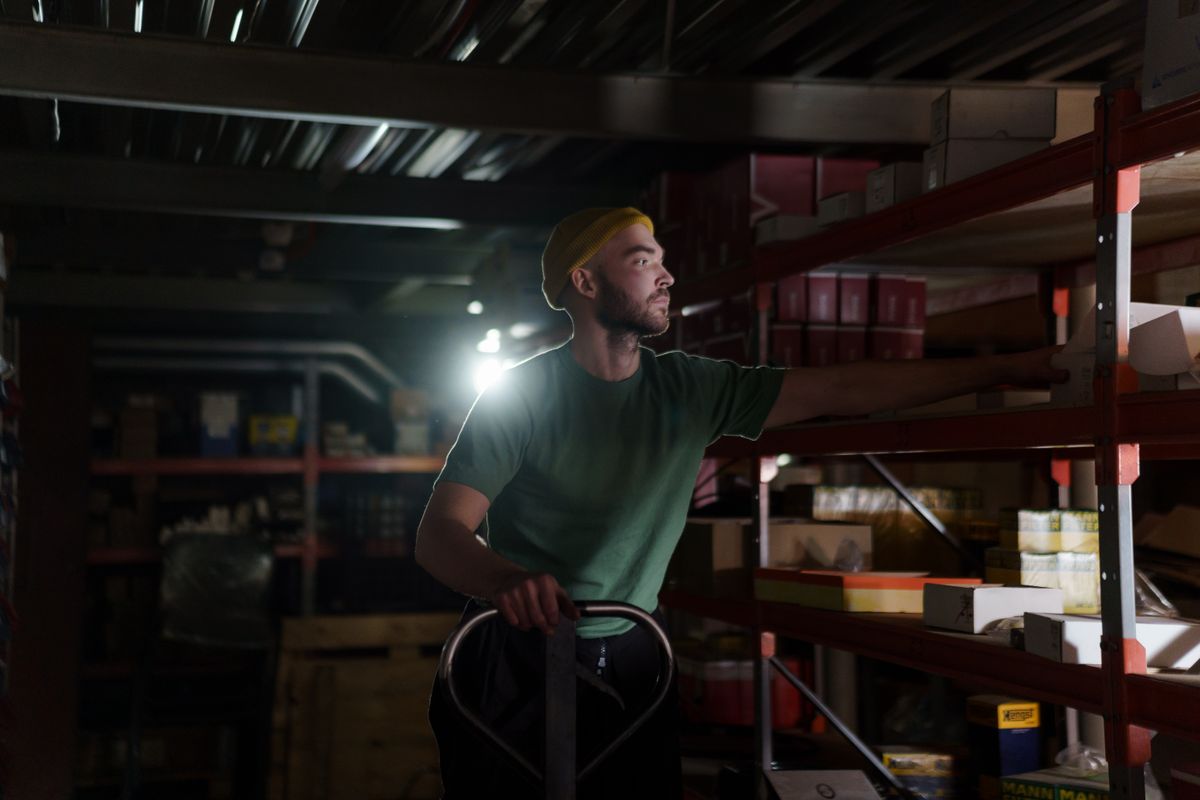
It's 6am on a Monday at a chilled distribution centre outside Dublin. Twelve pickers are on. Nobody stood at the whiteboard this morning to decide who takes the freezer, who goes on the dock and who gets the easy aisle. The handhelds just started showing jobs.
For some people on that floor this is a relief: no more arguing about who got the freezer three days running. For others it's the start of a worry from the news: a scanner that times every pick, a score nobody can see, no one to complain to.
Both reactions are reasonable. Which one your team ends up with depends mostly on choices you make during setup: what the software decides on a warehouse or production floor, and what it doesn't.

The shift already happened
"Algorithmic management" sounds like something that happens to couriers. The numbers say otherwise.
The EU's Joint Research Centre surveyed more than 70,000 workers across all 27 member states between October 2024 and January 2025. Around one in four (24%) said their work schedules are allocated automatically by algorithmic systems, and one in five (21%) said the same about their tasks. Ireland was one of the four countries where it was most common, and the report names manufacturing as a sector with high levels of it (JRC policy brief JRC144330). Only 2% of EU workers were fully platform workers. The rest are ordinary employees at ordinary sites.
Warehouses sit at the top of the table. A Eurobarometer survey, as summarised in Eurofound's 2025 literature review, puts logistics and warehousing first, with 44% of workers saying their schedule comes through digital tools or AI, and manufacturing second at 37% (Eurofound WPEF25083).
Workers whose schedule is handed out by software (%)
| All EU workers (JRC) | Manufacturing (Eurobarometer) | Logistics (Eurobarometer) | |
|---|---|---|---|
| Share of workers | 24% | 37% | 44% |
The two surveys asked slightly different questions, so read the bars as two angles on one picture, not one measurement. On a warehouse floor, software handing out shifts is already normal.
Managers are using it, and they have doubts about it. An OECD survey of more than 6,000 mid-level managers found that 79% of firms in France, Germany, Italy and Spain use at least one tool that instructs, monitors or evaluates workers. Nearly two thirds of those managers had at least one concern. The top three were unclear accountability when the tool gets a decision wrong (28%), not being able to follow its logic (27%), and not enough protection for workers' physical and mental health (27%) (OECD, December 2025).
Each of those is a design fault. None comes with the idea of letting software allocate work.
What going too far looks like
In January 2024, France's data protection authority fined Amazon France Logistique €32 million. Among the indicators the CNIL objected to was one Amazon called the "Stow Machine Gun". It flagged an item scanned less than 1.25 seconds after the previous one. Another logged every ten minutes or more that a scanner sat idle. The CNIL said the system put workers under constant pressure (France 24). Amazon disputed the findings and said it would appeal.
Across the Atlantic, California, New York, Washington and Minnesota have each passed warehouse quota laws since 2021. California's AB 701 requires quotas to be disclosed and bans any quota that stops people taking their breaks or going to the toilet (California Labor Commissioner).
Allocating work wasn't the problem in either case. Measuring people minute by minute and turning the numbers into pressure was. Eurofound's review makes the same point more quietly: in warehouses, handheld devices that guide workers through "minute-by-minute workflows" lower cognitive demands "but simultaneously curtail autonomy and task variety".
So the lesson isn't "keep the whiteboard". It's to be clear about which decisions the software gets.
People accept arithmetic, not judgement
Min Kyung Lee at Carnegie Mellon asked people to rate decisions made by an algorithm or by a manager. For what she called mechanical tasks, including work assignment and scheduling, people rated the two as equally fair and trustworthy. For tasks that need human judgement, such as hiring and performance evaluation, the algorithm's decisions were seen as less fair and made people feel worse (Big Data & Society, 2018).
Then there's the "algorithm aversion" work from Wharton. Dietvorst, Simmons and Massey found that people who had watched an algorithm make a mistake gave up on it quickly. But they were "considerably more likely" to keep using an imperfect algorithm when they could adjust its output, even when they were only allowed to change it a little. They also did better as a result (Management Science, 2018).
Put the two findings together and you have a working design brief for a floor:
- Let the software do the arithmetic: who's qualified, who's free, who's had the freezer three days running.
- Keep the judgement about people with people.
- Give everyone a bit of control over the result. Supervisors and workers.
That's all "human-centric" means here. Not a softer algorithm. A clear split of who decides what.
Who decides what, written down
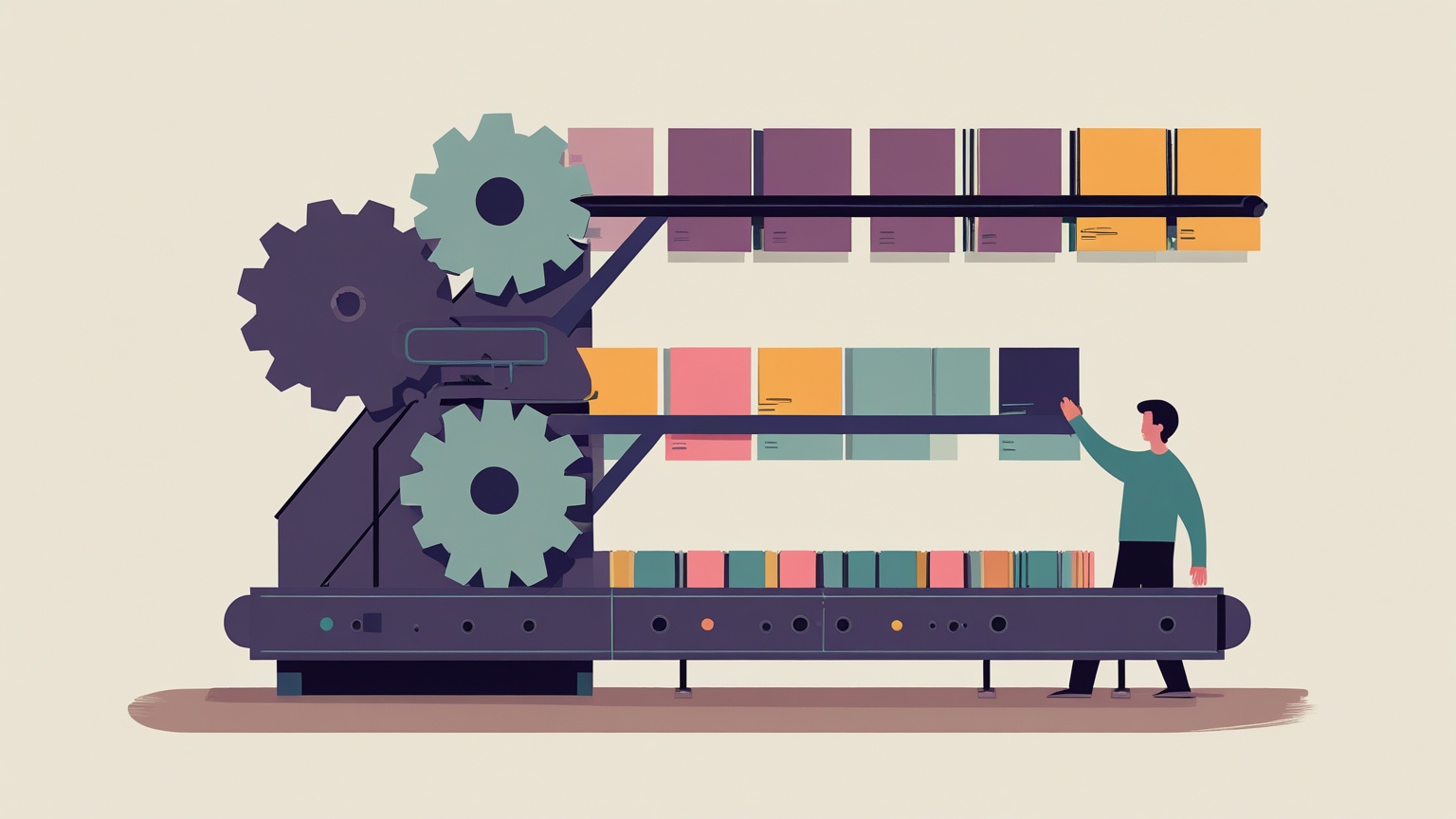
Here's the split as a simple chart. The software proposes and records. A person can change any decision, and the change is recorded too.
flowchart LR
  J[Job or shift arrives] --> H{Hard rules<br/>skills, licences, stops}
  H -->|not eligible| X[Ruled out, with the reason]
  H -->|eligible| S[Scored on the weights you set]
  S --> F[Work spread across near-equals]
  F --> O[Offered to a worker]
  O -->|accepts| A[Doing it]
  O -->|declines| S
  M[Supervisor] -. overrides .-> O
  O --> R[(Decision record)]
  M -.-> R
And the same thing as a table, because the bottom row is where most rollouts go wrong:
| Decision | Who makes it | Why |
|---|---|---|
| Is this person qualified for this job today? | Software, from rules you wrote | A licence or training record is a fact, and checking it is arithmetic |
| Of the qualified people, who's the best fit? | Software, using weights you set | Same as above, and it's faster and more consistent than a tired supervisor at 6am |
| Should the same person get the hard job again? | Software, told to spread the load | A person forgets who had the freezer on Tuesday. A record doesn't |
| Can I take this job right now? | The worker | They know things the system doesn't |
| Is this person any good at their job? | A manager | Lee's research: people don't accept this from an algorithm, and they shouldn't have to |
| This decision is wrong, change it | A supervisor, and it's recorded | Accountability needs a name attached |
Five choices that keep people in charge
This is how we built Fivexer's allocation to follow that split. You don't need our software to use the list. It's a decent checklist for any system you're looking at.
1. Rules people wrote, not scores the system invented
Work is handed out by rules someone on your site wrote down: skills with weights, priorities, and hard stops. A weight of zero means that person never gets that kind of job, whatever else they score. If Tomas has asked to stay out of the freezer for a health reason, that's one setting, and it holds every time.
What the system doesn't do by default is build a picture of each person from their behaviour. There's an optional learning layer that re-ranks eligible people based on how past jobs went. It's off unless you switch it on, and the hard rules always run first. The rota planner doesn't use it at all. It works only from declared skills, availability, legal limits, cost, and hours actually worked. We keep it that way on purpose. It's the difference between "the system knows your forklift licence" and "the system has an opinion of you".
2. The worker can say no
A worker can decline a job in their app. It goes back into the queue for someone else, and that same job isn't offered back to them. Nothing is deducted and nothing is flagged.
For rotas, workers can mark shifts they'd like and shifts they'd rather avoid, and flag a small number of wishes as important. The planner scales everyone's wishes to the same total weight, so the person who fills in thirty wishes doesn't outvote the person who fills in three. When the rota is published, each worker can see which of their wishes were kept. When one wasn't, they see why: the shift needed covering, a rule blocked it, or it went to a colleague as a trade-off.
A missed wish with a reason reads as a decision. Without one, it reads as being ignored.
3. Spread the work instead of piling it on the best person
This is the one most systems get wrong without anyone noticing. Suppose the goal is "always the best match". If Ana is slightly faster than everyone else, Ana gets every job. The dashboard looks great for a few weeks. Then Ana is exhausted, Priya and Tomas never build the skill, and the first day Ana is off sick the floor slows down.
Here's the same morning run two ways by the real matching engine, computed when this page loads. Ana, Priya and Tomas are all qualified pickers, with scores of 100, 95 and 90. One of the six jobs is in the freezer, and Tomas has a zero on freezer work.
Best match piles on Ana; spread work shares near-equal jobs — computed outcome:
- 3 agents, 6 tasks, same team — Best match vs Spread work. Every outcome below is computed, not drawn.
- Task pick 1 (pick) — Best match: A (score 100); Spread work: A (score 100).
- Task pick 2 (pick) — Best match: A (score 100); Spread work: P (score 95).
- Task pick 3 (pick) — Best match: A (score 100); Spread work: T (score 90).
- Task freezer pick (pick, freezer) — Best match: A (score 100); Spread work: A (score 100).
- Task pick 4 (pick) — Best match: A (score 100); Spread work: P (score 95).
- Task pick 5 (pick) — Best match: A (score 100); Spread work: T (score 90).
- The tally — Best match: A 6 · P 0 · T 0; Spread work: A 2 · P 2 · T 2.
With best match, Ana takes all six and Priya and Tomas take none. With spread work, it comes out two each. Ana takes the first job, Priya the second and Tomas the third. The freezer pick goes to Ana, because Tomas's zero rules him out even when it's his turn. Fairness never overrides a hard stop. Then the rotation carries on.
Spread work only reshuffles people who are close. Someone who scores far below the rest still won't take work they're clearly worse at. The setting is called fairness, with balanced for a light touch and spread-work for a strong one. It's covered in how matching works, and the trade-offs between strategies are in round robin vs load-balanced vs skills-based routing.
4. A supervisor can overrule anything, and it's recorded
The software makes the first call, but a supervisor can give any job to anyone. A queued job, a job already offered to someone, or a job someone has already accepted. When accepted work is moved, it arrives with the new person as an offer, never as something already accepted, because they haven't agreed to anything yet. The move is recorded against both people.
Before handing anything out, a supervisor can also ask who would get a job, without actually giving it to anyone. And when someone is on a break, in training or just having a bad morning, a supervisor can pause them. They stop getting new work, and nothing they already have is taken away.
That's the Wharton finding in practice: people trust the system more because they can change it.
5. Every decision keeps its reasons
When a job is handed out, the record is written at that moment: who was considered, their scores, who won, and why each person who was ruled out was ruled out. It isn't pieced together afterwards from logs.
This answers the OECD managers' top two worries directly. Accountability is clear because the override has a name on it. The logic can be followed because the reasons are on the record. And it's the record you'll need when the law asks for it, which is what our post on the Platform Work Directive is about.
Where the law is heading
None of this is legal advice, and nothing here makes a site compliant. But the direction is clear enough to plan around.
In December 2025 the European Parliament voted 451 to 45, with 153 abstentions, to ask the Commission for a directive on algorithmic management. It wants workers to be able to ask for explanations of decisions an algorithm made or supported, a human to take any decision to hire or end employment, and a ban on processing workers' emotional or psychological state (European Parliament). The Commission's consultation on a Quality Jobs Act, which closed on 28 September 2026, covers "making automated decisions more transparent and human-centred", and a proposal is expected later this year (European Commission).
In the UK, the TUC has published a draft bill with a right to human review and a personal explanation for high-risk AI decisions at work. Its polling found 69% of working adults think employers should consult staff before bringing AI in (TUC). That's a proposal, not law. But GDPR's rules on automated decisions already apply in Ireland and the rest of the EU, and in the UK through its own version.
Whatever the final texts say, a system that already keeps a person in charge and a reason on file will need new paperwork, not a rebuild.
Where this approach costs you
Spreading work has a price, and we'd rather you hear it from us. If Ana really is the fastest picker, giving a third of the jobs each to Priya and Tomas makes some mornings slower than giving them all to her. We can't tell you by how much, because Fivexer doesn't measure pick rates or time individual scans, and we don't plan to. You'll have to judge that with your own numbers.
The worker controls cost something too. A declined job has to go to somebody else, and on a short-staffed night that somebody may be the person who least wants it. The software can make that visible and share it out fairly. It can't make it go away.
And the software doesn't talk to your team for you. The best evidence that worker control pays off is a randomised trial at Gap stores, where letting staff swap shifts without a manager came with a 7% rise in median sales (WorkLife Law, 2018). That was retail, not a warehouse, and it came with a lot of explaining to staff. Tell people what the system decides and what it doesn't before it goes live.
Questions we hear
Is algorithmic management the same as employee monitoring?
No, though the two are often sold together. Allocating work means deciding who does what. Monitoring means measuring how people do it. You can have the first without the second, and most of the trouble in the news comes from the second.
Does a human have to approve every assignment?
No. That would bring the whiteboard back. What matters is that a person can change any decision, that the change is recorded, and that decisions about someone's job itself, like hiring, discipline or dismissal, stay with people.
What should I tell staff before switching it on?
What the system uses (skills, licences, availability, the stops they've asked for), what it doesn't (performance scores, behaviour tracking), how to decline a job or state a wish, and who to talk to when it gets something wrong.
Will workers game their wishes?
Some will try. Because every person's wishes are scaled to the same total, filling in more of them doesn't buy more influence, and the number of important wishes is capped.
Try it on one job type
Take one kind of job on your floor, say freezer picks or dock loading. Write down who's qualified, who's asked to stay off it, and how you'd want it shared. Then set that up in Fivexer, switch fairness to spread work, and read the decision record for the first ten jobs. If you'd be comfortable showing that record to the person who didn't get the job, you've built it the right way round.