 Illustrative
Fivexer → Anna7am
Forklift relief, Dock 3. You hold the licence and have the lightest load.
Clarity
Everyone knows what is theirs.
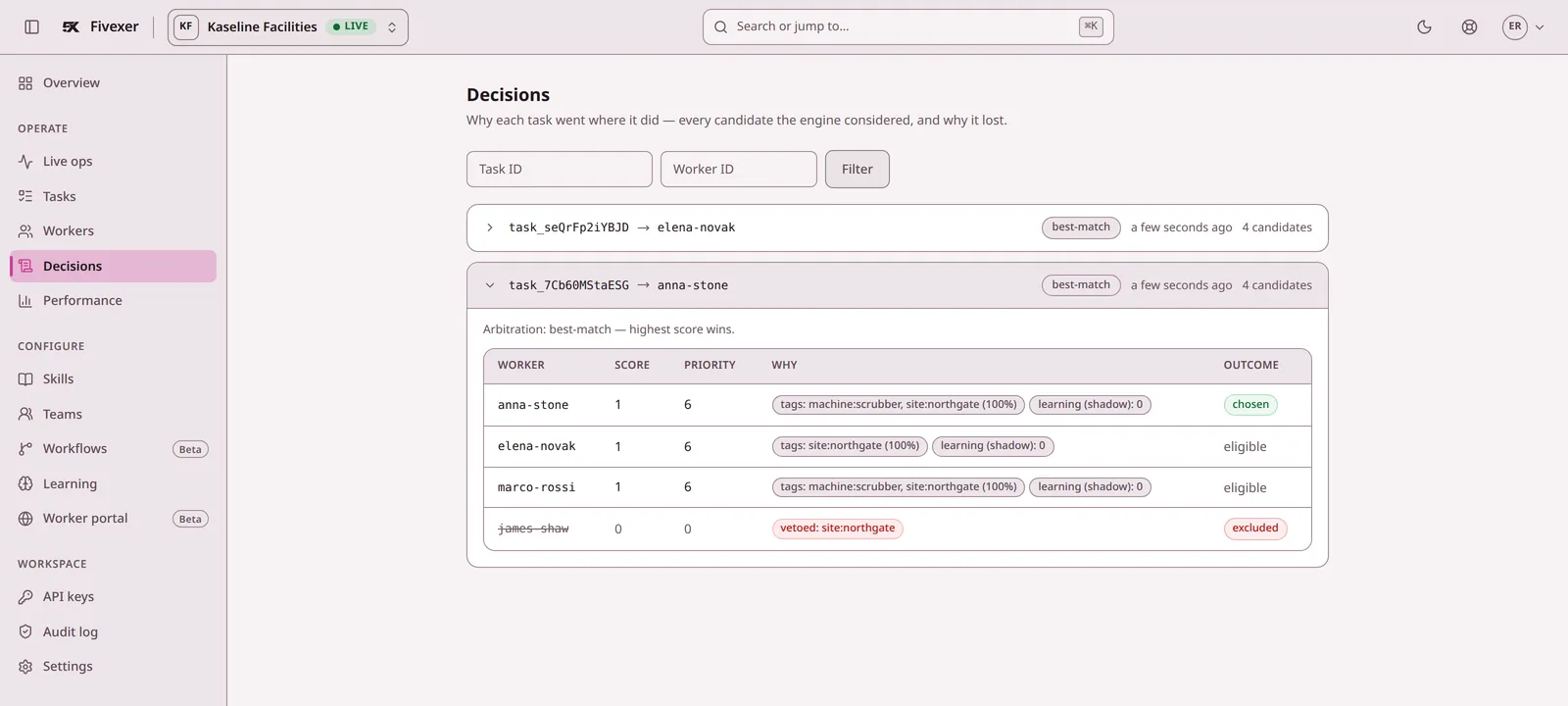
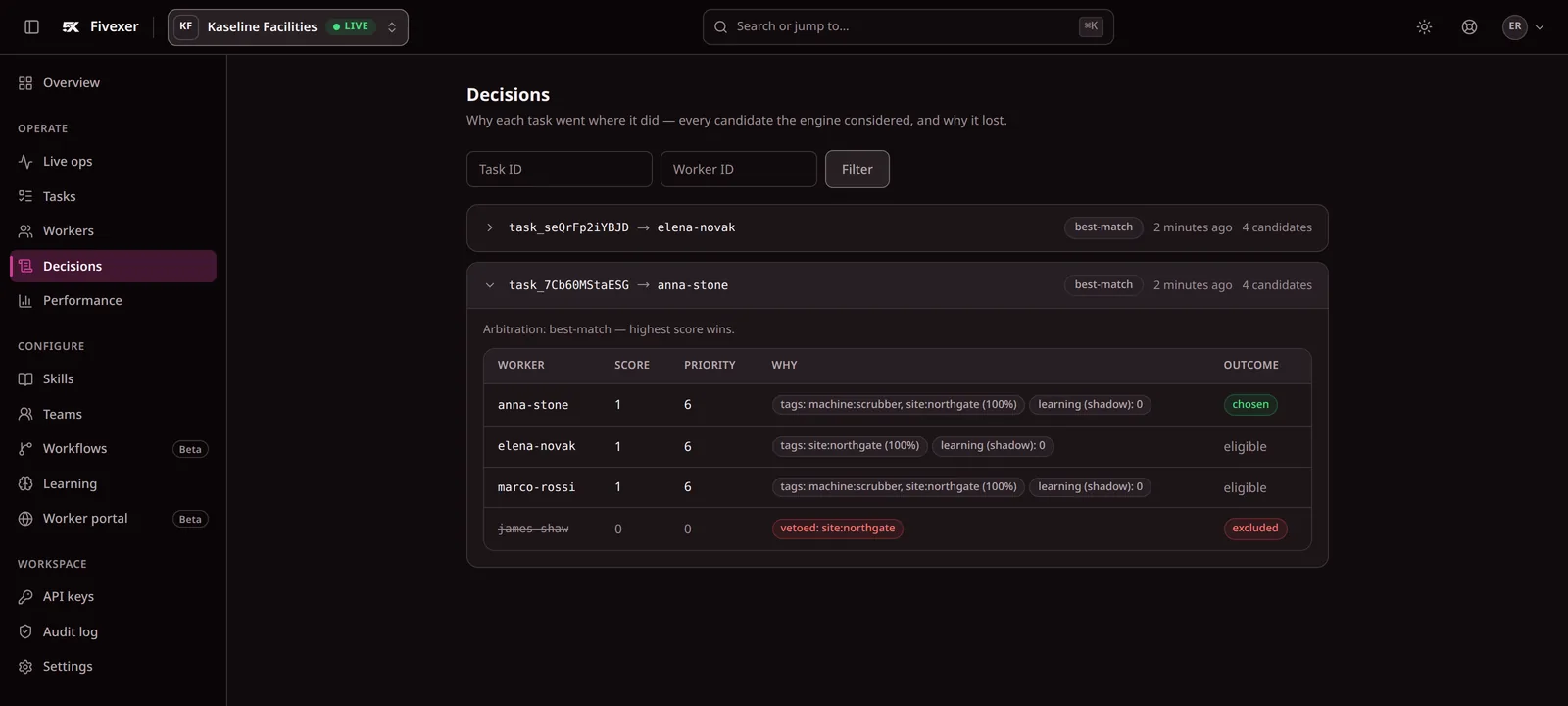
Each job goes to one person, with the reason on record.
Assign every job. To an agent or a person.
Free for 15 people. No credit card. No trial countdown.

You talk to the person who built it. Viljar, founder. A person replies within 1 working day. support@fivexer.com
IllustrativeForklift relief, Dock 3. You hold the licence and have the lightest load.
Each job goes to one person, with the reason on record.
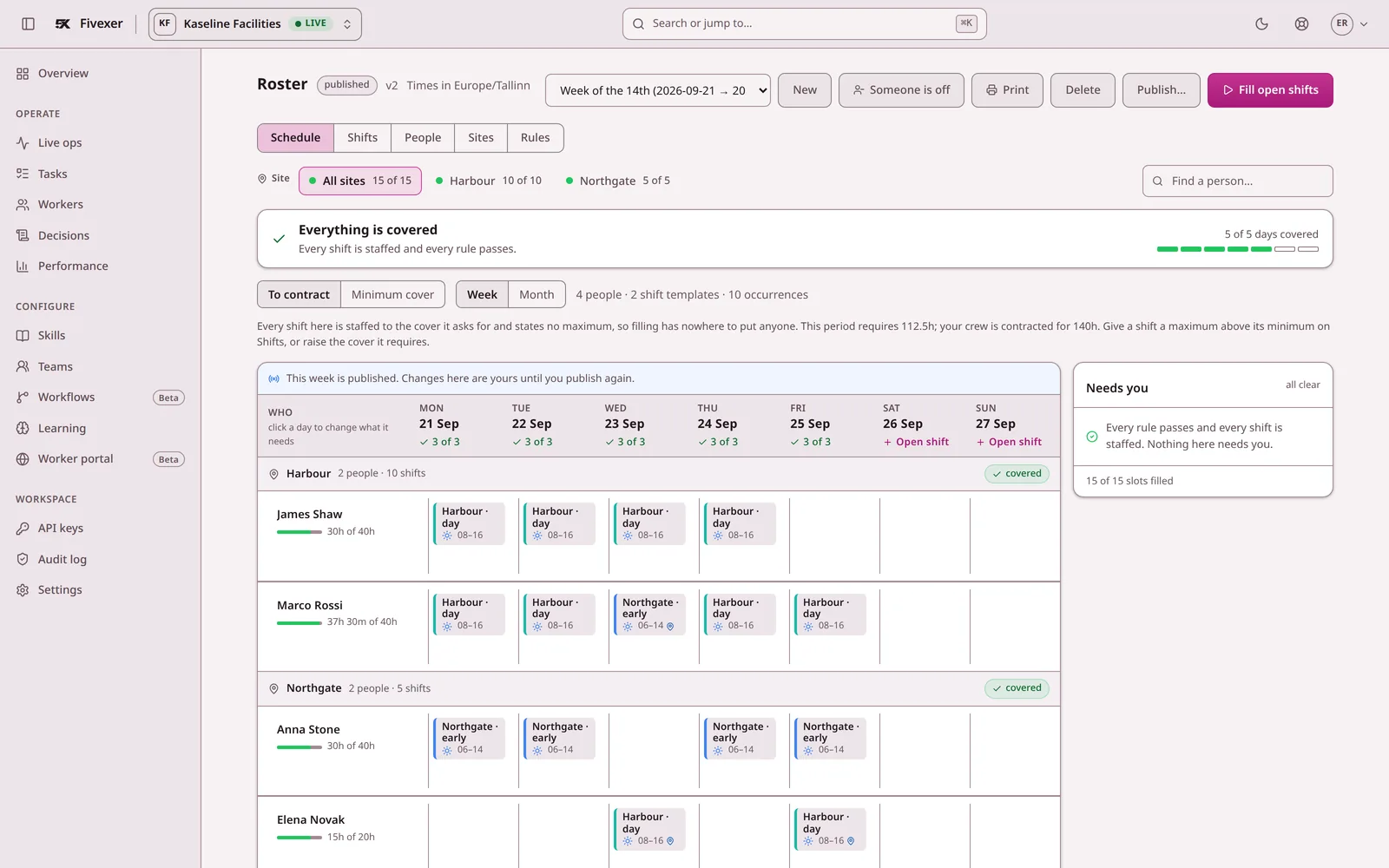
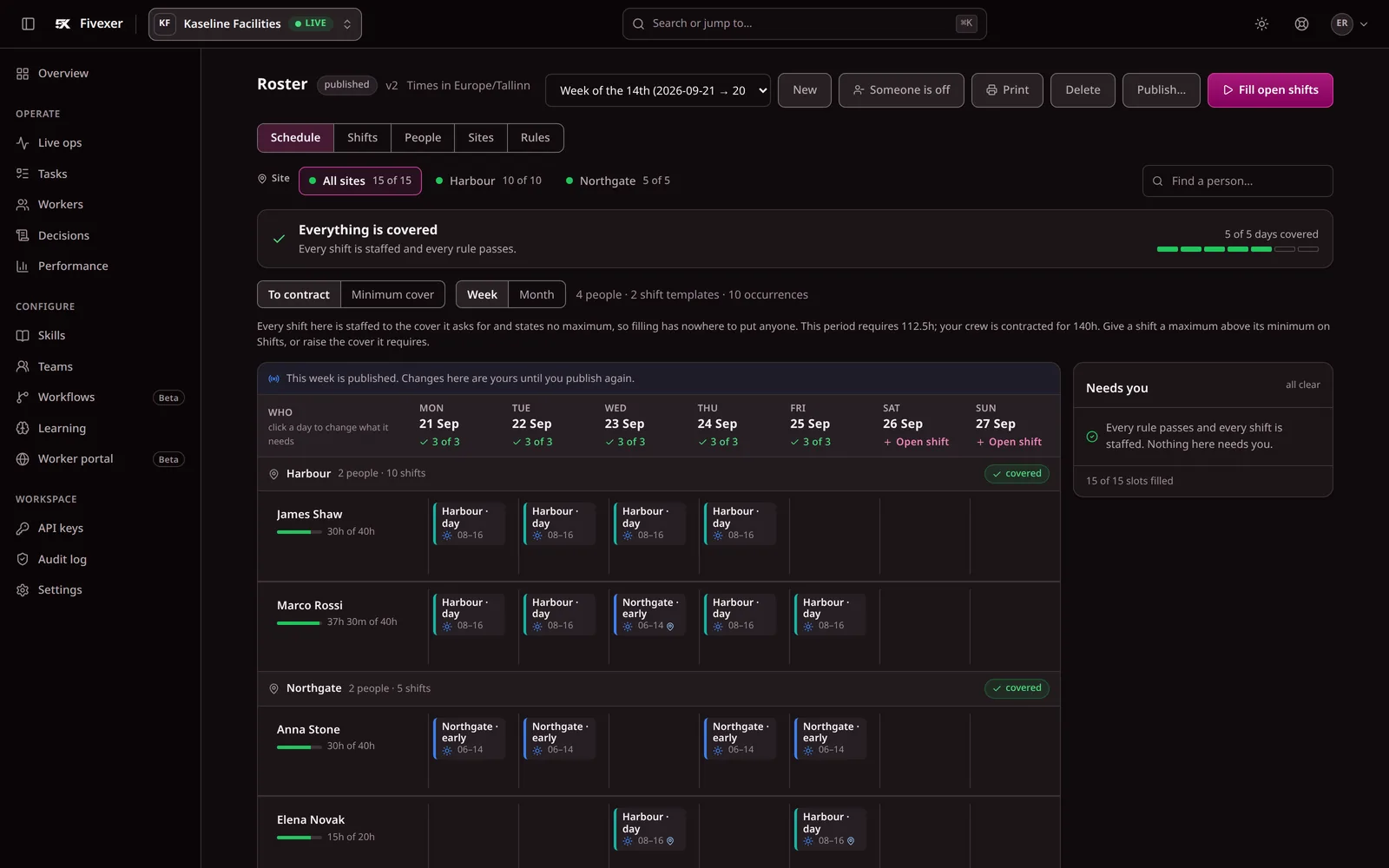
 Illustrative · the sample rota
Double bookings, too little rest and missing skills show up while you plan.
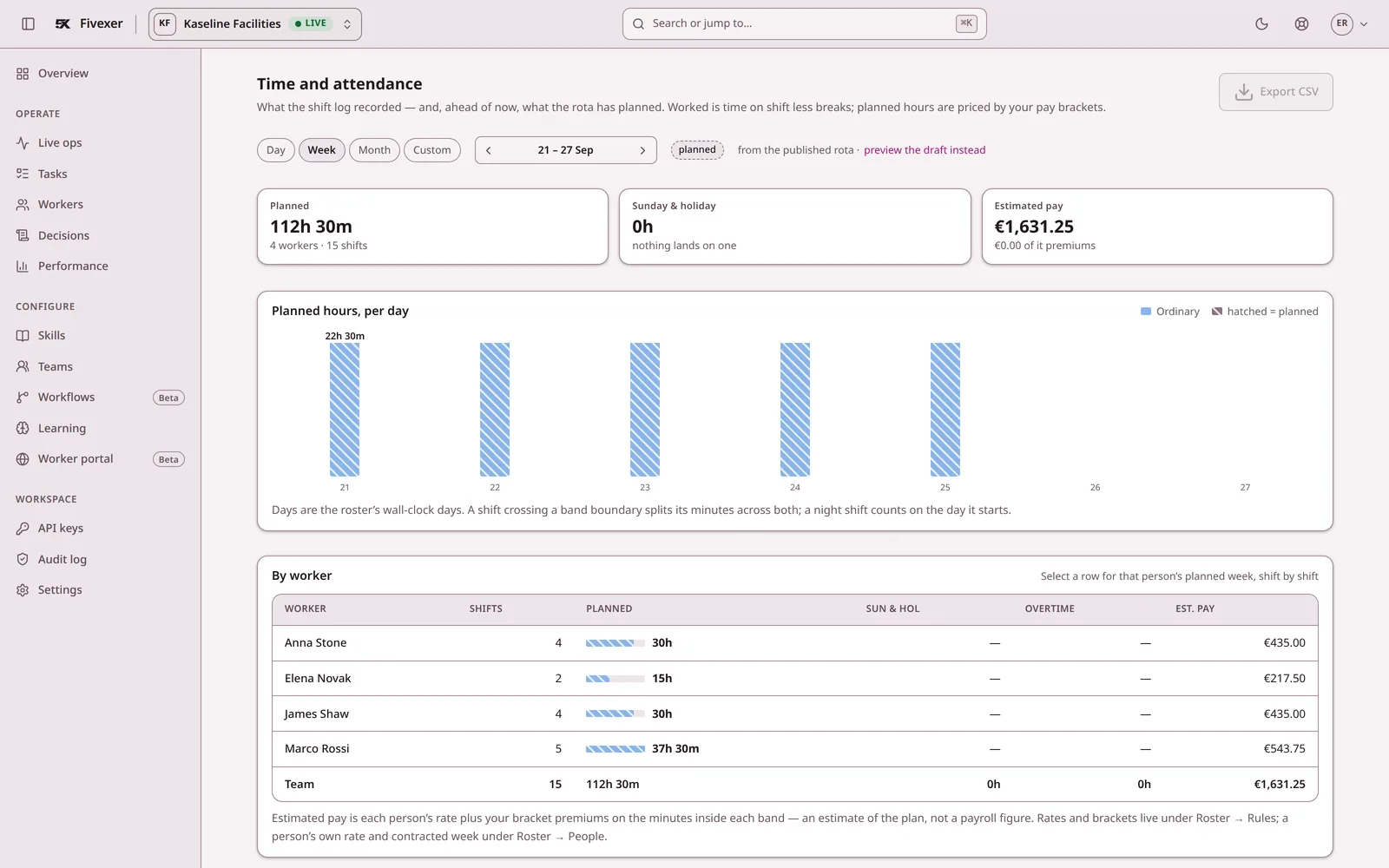
Autopilot plans next week on time. You check it and publish it, or let it go out on its own.

Nights and weekends are shared evenly, and wishes count in every plan.
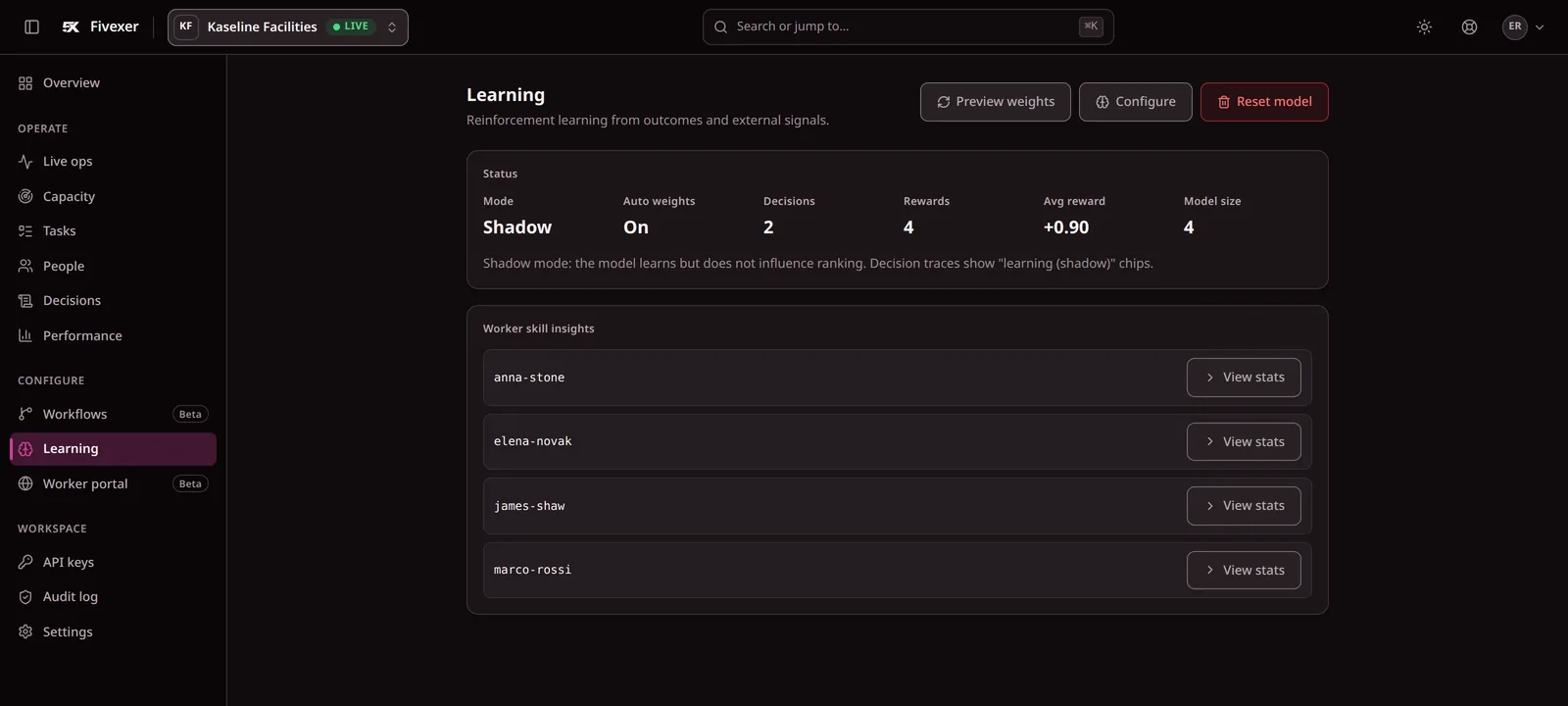
Skills, capacity, priority, rest and fairness are figures you set once. Every job after that goes out without anyone reading the queue.
Routing, escalation, the record, learning and the rota feed each other. The more work goes through, the less anyone has to manage it.
Nobody cherry-picks from a shared queue. The highest-priority job goes to the best-fit person who is free, within the workload limit you set.

New job: floor scrubber fault, Northgate
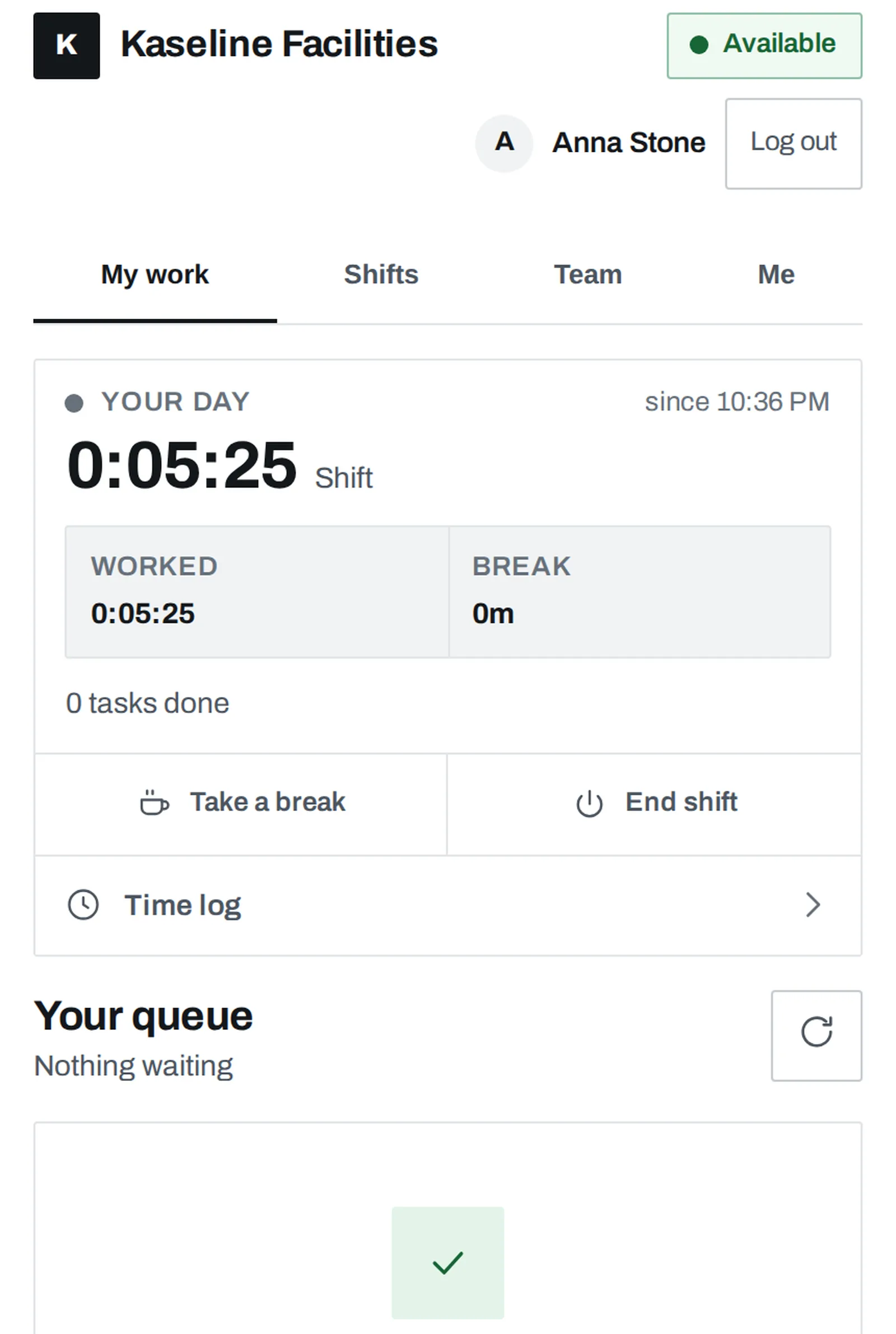
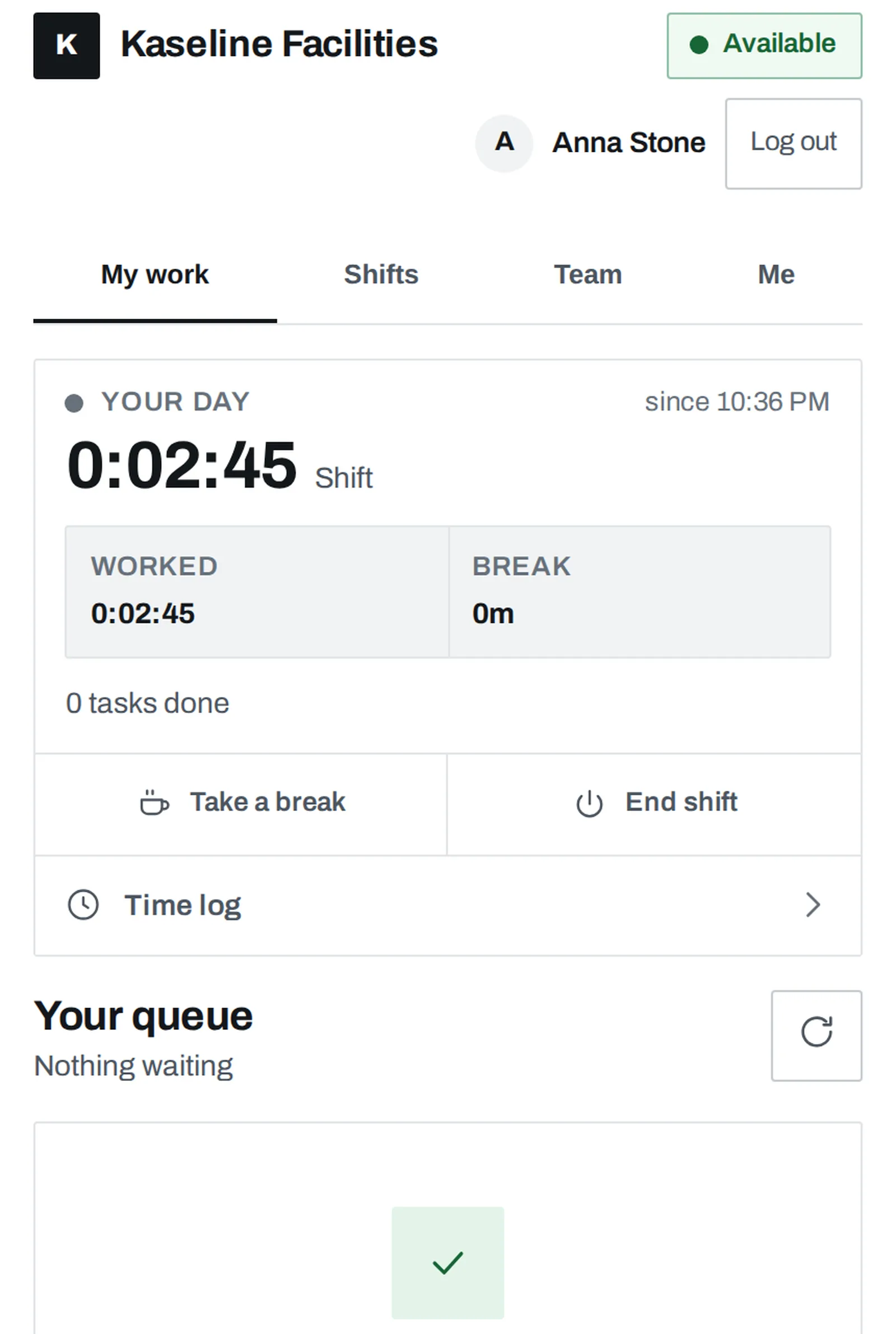
AcceptNot nowManager in the console, worker on the phone they have.

The Wed · Harbour · night shift opens. Nothing else on the rota moves.
 IdaOut sick · 6am
 NoorOn the rota
 FrejaOn the rota
 SamOn the rota
 ElifOn the rota
 JonasOn the rota
 MateoOn the rota
One absence. One shift reopened.
4 ruled out, one offer sent, and the rest of the week exactly as published.
You’ve seen how it decides. Now start with your team.
You can be routing your own work the same afternoon. Nothing below needs a rollout plan.
Same afternoon
from an empty workspace to the first routed queue.
Names, skills and sites, by hand or from a CSV. No developer, and no data migration.
Minutes
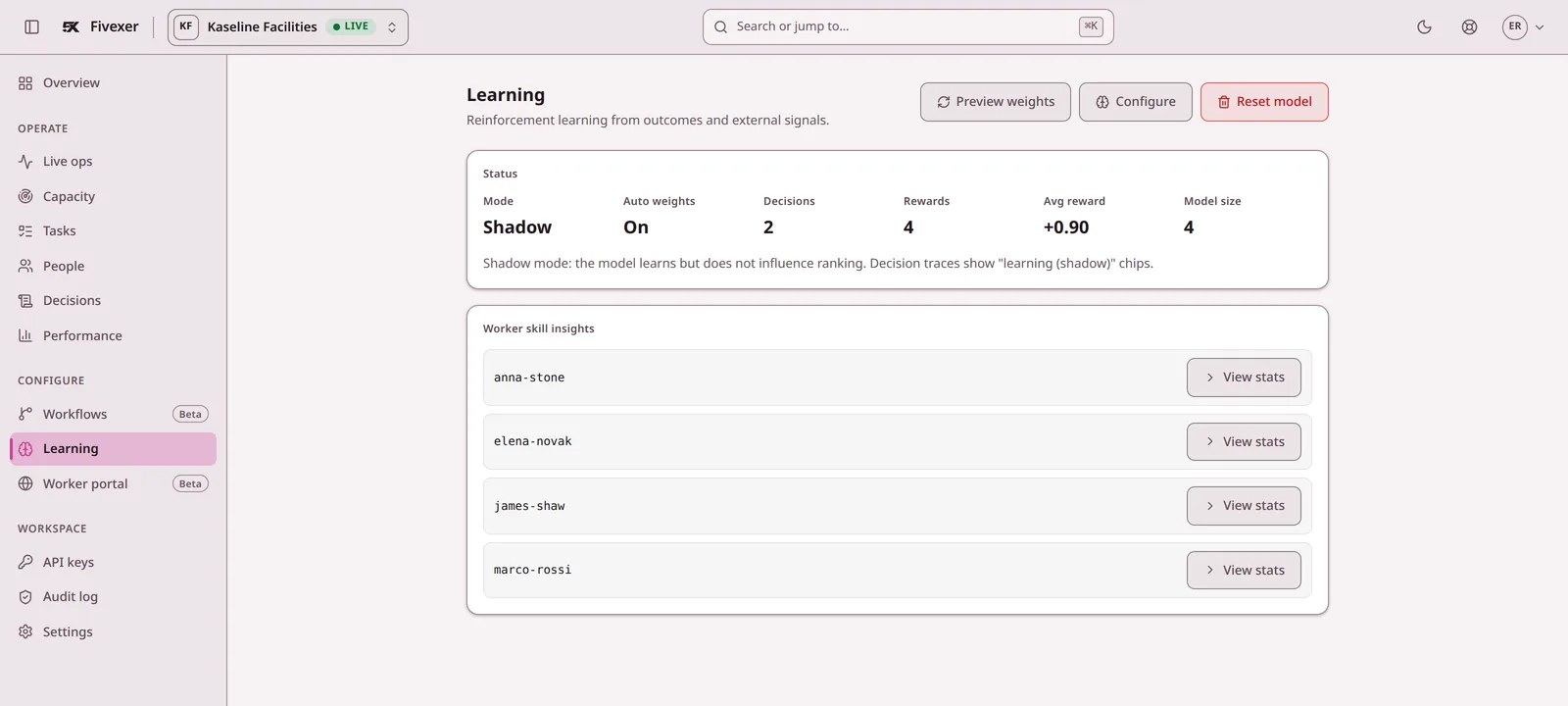
One queue, or one week’s roster, in shadow beside how you decide today. Read the decisions before anyone’s work depends on them.
An afternoon
A webhook in, a decision out, on every ticket or job — over the API, the SDK, or an AI assistant that speaks MCP.
When you choose
Anything that speaks MCP can drive a workspace, and any builder that can call an API can put a screen on one. Shown for compatibility; no affiliation implied.
https://api.5xer.com/mcpAdd it as a connector — OAuth, no key to paste and nothing to install. How to set it up →
Fivexer sits beside your helpdesk, field app, payroll and HR system — it replaces none of them. There is no one-click connector yet, and we would rather say so here than on the second call. The docs and the agent interface are how a developer wires it up; moving from Twilio TaskRouter has a written migration guide.
You are going to ask procurement to approve us. These are the facts they check first — and the page that proves each one, including the certifications we do not hold.

“I wrote the routing engine, I run the infrastructure, and I answer this mailbox. If you are weighing up whether a small EU vendor is a safe bet for something as load-bearing as who gets your work — write to me directly and ask the hard version of the question.”
Viljar Võidula · viljar@fivexer.com · the engine on GitHub
Testreel OÜ, registered in Estonia (reg. 12592678). The full security account — including the certifications we do not hold and every subprocessor outside the EEA.
UK rota apps list £2 to £6.88 a person a month. Rota, cover, time tracking, leave and the worker app are all in ours. See the sourced comparison.
15 people
€0 a month
25 people
€5 a month
60 people
€22.50 a month
120 people
€52.50 a month
Free€0.50 a monthEach dot is 5 people. On Pay as you go, which has no monthly fee.
10,000 assignments a month are free. Past it, pay €4 per 1,000, or move to a plan from €99 a month. Matching pauses at the monthly allowance.
Five sliders. The answer updates as you move them.
Two of these are our estimate, from your volume and team size. Drag either to replace it with your own.
An hour of their time is salary plus everything you pay on top of it. Ask one of them; it is usually more than you think.
Spent deciding who takes what
$55,328a year
0.7 of a full-time job.
It pays for itself the moment it hands back <1% of those hours.
The 70% case is an educated planning estimate, not a measured Fivexer result. It keeps 30% for exceptions, rule maintenance and oversight. A published ticket-routing example reduced assignment from two hours to immediate; broader research estimates 49% of managerial work is technically automatable. Neither source proves your result. Routing example · Management research
Need voice, SMS, or a full helpdesk built in? That's Twilio's and Zendesk's home turf — Fivexer is the routing and rostering engine only, by design. Priced side by side, with sources and dates: Twilio TaskRouter, Zendesk, Genesys / NICE / Five9.
Fivexer Cloud prices are published EUR list prices as of August 2026, excluding negotiated discounts, HA replicas and egress. Free tier up to 10,000 assignments/mo. Paid billing starts when checkout launches; launch price locked for 12 months from first invoice. See /pricing → · What happens when launch pricing ends
TaskRouter routes tasks to workers by skill and priority and charges $0.06 for each one, forever. Fivexer does the same job on a flat plan, keeps routing data in the EU, and writes down why each worker was chosen.
$2,994 a month
€99/ month
At 50,000 assignments a month. Their published list price, then ours.
Bars compare the printed figures at face value. €1 ≈ $1.08 changes nothing you can see.
Moving over is a webhook in and a decision out. The migration guide maps workspaces, task queues and worker attributes to their Fivexer equivalents, and the full Twilio TaskRouter alternative comparison runs eleven rows, both ways.
Route one queue beside TaskRouter, freeAlso comparedZendeskGenesysDeputyPlandayConnecteam
Twilio’s figures are its published list price (twilio.com/en-us/pricing) as of August 2026, in USD as published. Ours are in EUR, as published on /pricing. TaskRouter is excellent at what it is built for; this is about fit as a routing engine, not overall product quality.
Every evaluation reaches them within ten minutes. Answered here in writing, so the first call can start at question ten.
No. Add your people and their skills in the console, then create work there or import a backlog from a CSV, and build the first roster in the same place. A developer connects your helpdesk or field app later, over the API — in an afternoon, not a quarter.
Run it in shadow first: let the engine decide alongside whoever decides today and compare the two. Most teams read a week of decisions, or a solved rota beside their existing one, before anyone’s work depends on it. There is a shadow-mode checklist for exactly that.
Reassign in one click, and the record keeps both decisions. A rule you did not write cannot be broken, and a veto you did write cannot be learned around — the learning layer only re-ranks candidates who already passed every hard rule.
Yes, and it takes about a minute rather than a project: point Claude, ChatGPT, Cursor or anything that speaks MCP at api.5xer.com/mcp, sign in, and it can create work, read the queue, solve a roster and ask why a decision went the way it did. OAuth, so there is no key to paste and nothing to install, and you grant read or read-and-write. The deciding stays deterministic: an agent asks the engine to decide, never instead of it, so every rule and every trace still holds.
It sits beside them rather than replacing them: a webhook in, a decision out, on every ticket or job. There is no one-click connector yet, and we would rather say so here than on the second call. Moving from Twilio TaskRouter has a written migration guide.
Only the ones you configure. Start from a published country pack or enter the figures yourself — minimum rest, hours in a rolling window, night limits. Packs are editable starting points, not rules Fivexer applies automatically. A blank rule is not checked; a configured rule is enforced and explained in plain language.
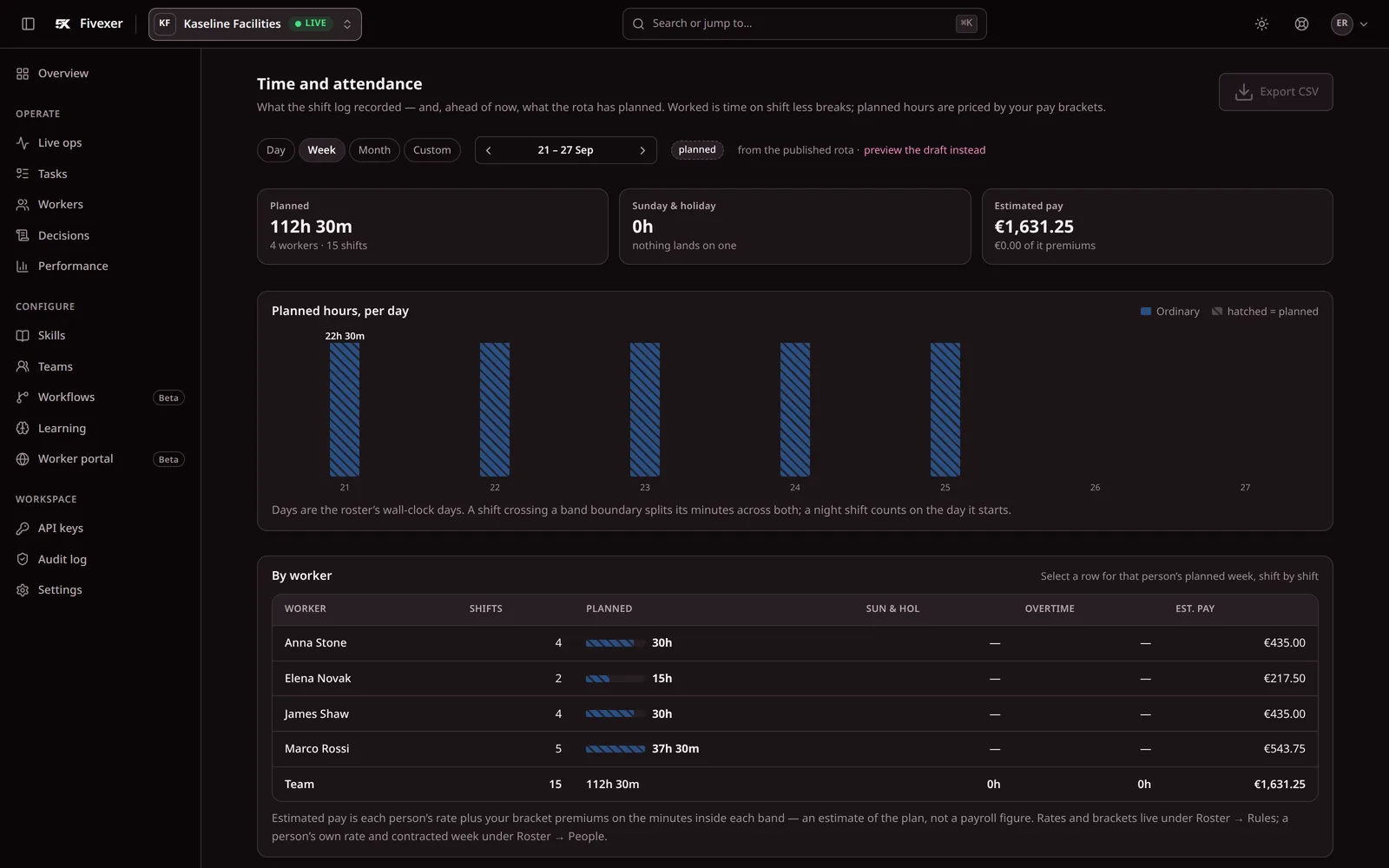
No. Fivexer builds and covers the roster and routes the work; payroll, accounting and HR stay where they are. Planned and worked hours, including premiums, export as a record payroll can read.
No. The worker portal opens on the phone they already have, with a PIN rather than a password, in the language they read, with your name on it — for today’s jobs and this week’s shifts alike.
Export is free on every plan, and the matching engine is open source under the MIT licence — so you can run your own rules and traces on your own Redis the same day. Routing data is held in one EU region, and every subprocessor is named on the security page.
Create your free workspace, add your team and review your first decisions. No credit card. No trial countdown.
Bring one queue or roster and the rules your team follows. We’ll discuss the setup, how to review the decisions, and what it would take to run it in production.
Discuss my workflow →We’ll agree the scope and any cost before work starts. A person replies within 1 working day.